From Riyadh to Rotterdam: How Arabian Startups Are Quietly Rewriting the Rules of Global Supply Chains
If your mental map of global tech innovation still has the Arabian Peninsula somewhere between "oil exporters" and "luxury real estate," it's time for a serious update. Over the past five years, a cluster of scrappy, well-funded, and frankly impressive startups have been building solutions to some of the world's most stubborn supply chain headaches — and they're doing it from places like Dubai, Riyadh, and Muscat.
We've been watching this space closely here at Gadgets Arabia, and the momentum is undeniable. So let's break down who's doing what, and why you — whether you're a tech investor in Silicon Valley or a logistics manager in Ohio — should absolutely be paying attention.
Why the Gulf Makes Sense as a Supply Chain Innovation Hub
Before we get into the companies themselves, it's worth asking: why here, why now?
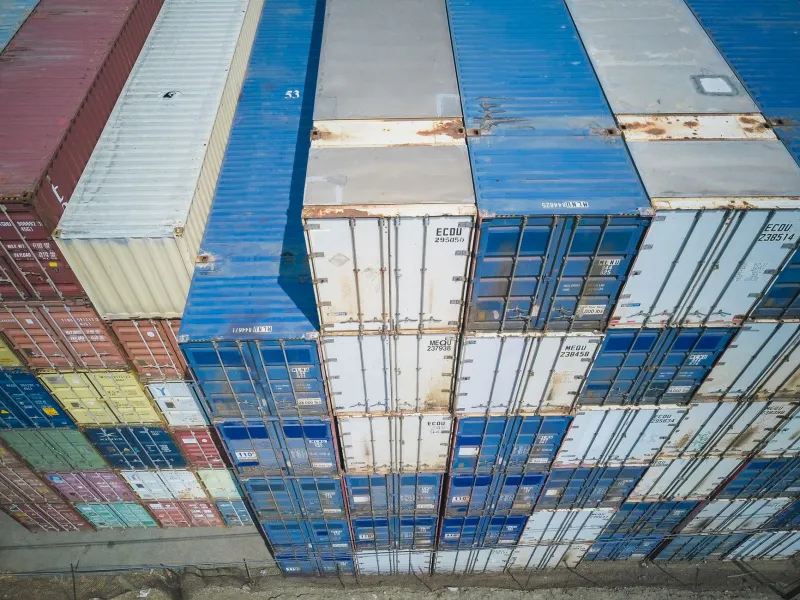
Geographically, the Arabian Peninsula sits at a crossroads between Asia, Europe, and Africa. Ports like Jebel Ali in Dubai handle more container traffic than any port on the US East Coast. That physical reality has forced local entrepreneurs to think hard about logistics, warehousing, and distribution in ways that companies in landlocked startup ecosystems simply don't have to.
Add to that a wave of government-backed innovation programs — Saudi Vision 2030, the UAE's National Innovation Strategy, and Qatar's tech investment push — and you've got serious capital flowing toward founders who are solving real industrial problems, not just building another social media app.
The Startups You Need to Know
Barq Systems (Riyadh, Saudi Arabia)
Barq started as a last-mile delivery platform for e-commerce, but it's evolved into something far more interesting: a full-stack logistics intelligence layer that uses predictive routing and real-time demand sensing to cut delivery costs by up to 30%. Their API-first approach means they plug directly into platforms like Shopify and WooCommerce — tools American small business owners use every day. They've already expanded operations into Egypt and Pakistan, and rumor has it a US pilot program is in the works.
Trukkin (Dubai, UAE)
Think of Trukkin as the Uber Freight of the Middle East and South Asia, but with a sharper focus on cross-border freight visibility. Their platform connects shippers with vetted carriers across 12 countries and provides real-time cargo tracking that rivals what the big American 3PLs offer. For US companies sourcing goods from South Asia that transit through Gulf ports, Trukkin's visibility tools could meaningfully reduce the kind of "where is my shipment?" anxiety that defined the pandemic supply chain era.
Flick (Abu Dhabi, UAE)
Flick is doing something genuinely novel in the consumer electronics distribution space. They've built a B2B marketplace specifically for refurbished and certified pre-owned electronics, with a verification and grading system that's frankly more rigorous than what you'd find on most American recommerce platforms. As sustainability becomes a bigger purchasing factor for US consumers, Flick's model — which has already processed over two million devices — offers a template worth studying.
Cequens (Cairo, Egypt / Dubai, UAE)
Okay, Cairo isn't technically on the Arabian Peninsula, but Cequens operates heavily across Gulf markets and deserves a mention. They provide communications infrastructure — think programmable SMS, voice, and messaging APIs — that keeps supply chain communications running across regions where carrier reliability is inconsistent. Several global logistics firms already use their platform to send shipment alerts and driver coordination messages across the MENA region.
Cartona (Cairo / Riyadh)
Cartona is digitizing the informal retail supply chain — the millions of small corner stores and independent retailers that dominate commerce in the region. Their platform connects manufacturers directly to these micro-retailers, cutting out layers of middlemen. For consumer electronics brands looking to penetrate emerging markets efficiently, Cartona's distribution intelligence is genuinely valuable. They've raised significant funding and are expanding aggressively.
Sary (Riyadh, Saudi Arabia)
Similar in spirit to Cartona but focused on the food and FMCG sector, Sary has built a B2B marketplace that's moved billions of riyals in goods. Their approach to demand forecasting — built on purchase pattern data from thousands of small businesses — is the kind of dataset that major CPG brands would pay handsomely for. As they expand into adjacent categories including electronics accessories and household tech, they're worth watching.
Flextock (Dubai / Cairo)
Flextock offers outsourced fulfillment for e-commerce brands across the Middle East and North Africa — essentially a regional version of Amazon FBA. But what makes them interesting to a global audience is their tech stack: AI-driven inventory positioning that recommends where to store which products based on predicted regional demand. For American DTC brands eyeing Gulf expansion, Flextock removes a massive operational barrier.
What American Investors Are Missing
Here's the honest take: US venture capital has been slow to engage with this ecosystem compared to the attention lavished on Southeast Asian or Latin American startups. Part of that is familiarity bias. Part of it is that Gulf-region exits have historically happened through strategic acquisitions that don't generate the splashy IPO headlines that drive VC narrative.
But the fundamentals are strong. The Gulf Cooperation Council's combined GDP exceeds $2 trillion. E-commerce penetration is growing faster than almost anywhere else on earth. And the infrastructure investments being made — in ports, in 5G, in free zones designed to attract logistics companies — create a durable competitive advantage for startups building on top of them.
Firms like SoftBank, Mubadala, and Saudi Aramco's Wa'ed Ventures are already writing large checks. The window for early-stage US investors to get in at reasonable valuations is narrowing.
The Bottom Line
Supply chains broke spectacularly during the pandemic, and the scramble to fix them revealed just how dependent the global system was on a handful of chokepoints and legacy players. The startups emerging from the Arabian Peninsula aren't just patching those holes — in several cases, they're building genuinely better alternatives.
For American tech companies, logistics operators, and investors, the message is simple: the next wave of supply chain innovation isn't coming exclusively from Silicon Valley or Shenzhen. Some of it is coming from the desert, and it's moving fast.