Smarter Cities, Hotter Climates: What Dubai, Riyadh, and Doha Are Teaching the World About 5G Urban Tech
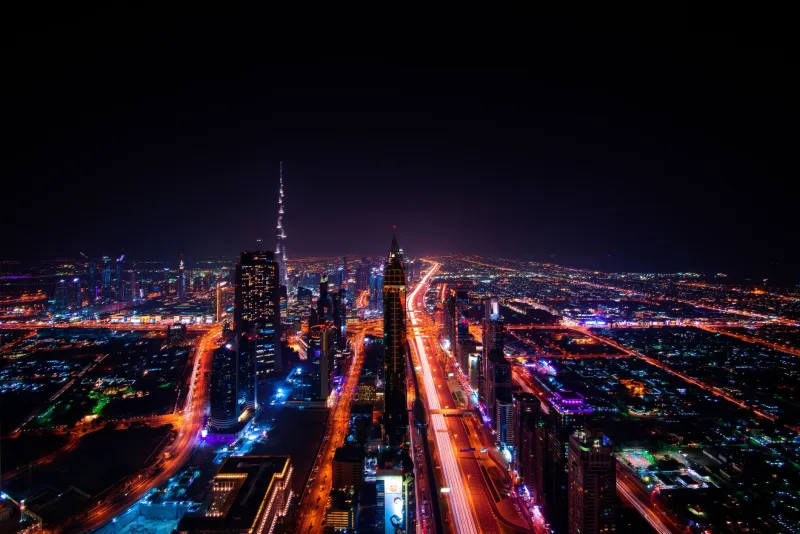
The Desert Has Better Wi-Fi Than Your City
Let's just say it plainly: if you live in a mid-size American city and you're frustrated by spotty connectivity, aging public transit, and traffic systems that feel like they were designed in 1987, you might want to look at what's happening about 7,000 miles east.
Dubai, Riyadh, and Doha have become genuine laboratories for 5G-powered urban technology — not in the 'pilot program' sense that American cities love to announce and then quietly shelve, but in the full-deployment, real-world-scale sense. These cities are running autonomous vehicles on public roads, using AI to manage energy grids in real time, and building digital twin simulations of entire urban zones. And they're doing it fast.
For Gadgets Arabia readers in the US, this isn't just interesting trivia. These are solutions being engineered for extreme conditions — scorching heat, rapid population growth, massive infrastructure demand — that translate surprisingly well to American urban challenges. Let's take a city-by-city look.
Dubai: The 5G Benchmark
Dubai's relationship with 5G goes back further than most people realize. The emirate launched commercial 5G services back in 2019, making it one of the earliest large-scale deployments anywhere in the world. Since then, the network has become the backbone for an ambitious array of smart city applications.
Autonomous public transport. Dubai's Roads and Transport Authority has been running autonomous pods and self-driving shuttle trials on dedicated routes, with 5G connectivity enabling the split-second data exchange these vehicles require. The goal is for 25% of all journeys in Dubai to be autonomous by 2030 — a target that sounds audacious until you realize the infrastructure is already partially in place.
AI-powered traffic management. Dubai's Unified Traffic Management System uses machine learning to analyze real-time feeds from thousands of cameras and sensors, dynamically adjusting signal timing and routing to reduce congestion. During peak hours, the system has reportedly cut average commute times by meaningful margins — something anyone who's sat on the 405 in Los Angeles would appreciate.
Smart energy grids. Dubai Electricity and Water Authority is deploying IoT-enabled grid management across the city, using 5G-connected sensors to monitor consumption in real time and predict demand spikes before they happen. In a city where air conditioning is essentially a survival requirement, that kind of grid intelligence isn't a luxury — it's critical infrastructure.
Riyadh: Building a Smart Capital from the Ground Up
Saudi Arabia is doing something arguably even more ambitious than retrofitting an existing city — it's building new ones from scratch with smart infrastructure baked in from day one.
You've probably heard of NEOM, the futuristic megaproject in the northwest of the country. Whatever you think of its more theatrical elements, the underlying technology infrastructure is serious. The project is designed around a fully integrated 5G network, with IoT sensors embedded throughout the built environment and AI systems managing everything from waste collection to public safety.
But Riyadh itself is where the more immediately practical work is happening. The city has been rolling out smart traffic systems, connected public transit, and 5G-enabled emergency response infrastructure as part of its Vision 2030 modernization program. Saudi Telecom Company has been aggressively expanding 5G coverage, and the government has made connectivity infrastructure a national priority in a way that puts US federal broadband policy to shame.
One specific application worth highlighting: AI-assisted urban planning tools that use real-time population movement data to optimize where new services, roads, and housing get built. For a city growing as fast as Riyadh, that kind of data-driven planning isn't just efficient — it's essential.
Doha: The 5G World Cup Legacy
Qatar's 5G story got a massive boost from the 2022 FIFA World Cup, which served as a forcing function for rapid infrastructure deployment. The country built out one of the densest 5G networks in the world to support the event — and crucially, kept it running after the cameras left.
Doha has been putting that infrastructure to work in some genuinely interesting ways. Smart stadium technology developed for the World Cup has been adapted for other large venues and public spaces. Connected transportation corridors link the city's metro system with surface roads, with real-time data flowing between systems to optimize passenger flow.
Perhaps most relevant to American cities: Doha's heat management infrastructure. Qatar has deployed IoT-enabled cooling systems in public outdoor spaces, using sensor data to activate misting, shading, and air circulation systems based on real-time temperature and occupancy data. As American cities face increasingly brutal summer heat — Phoenix hit 110°F for weeks last summer — this kind of climate-adaptive urban tech is going from novelty to necessity.
What American Cities Can Actually Learn
Okay, so the obvious objection here is that Gulf cities are essentially petro-funded urban experiments with essentially unlimited capital and centralized decision-making. Fair point. You can't just transplant the Dubai model to Detroit or Memphis.
But there are real, transferable lessons that don't require an oil fund:
Standards-first deployment. One reason these cities have been able to build cohesive smart infrastructure is that they set interoperability standards before deployment, not after. American cities often end up with fragmented systems from different vendors that can't talk to each other. The Gulf approach — mandate open standards upfront — is replicable.
Public-private speed. The pace of deployment in these cities comes partly from streamlined public-private partnership structures. US cities can't move as fast, but they can reduce the procurement and approval friction that turns 18-month projects into 7-year ones.
Climate-adaptive design. The technologies developed for extreme heat in the Gulf are directly applicable to the Sun Belt and increasingly to the broader US. American cities should be licensing and adapting this technology now, not waiting to reinvent it.
Data governance frameworks. Gulf smart cities have had to grapple early with questions about surveillance, data ownership, and citizen privacy. Some of those answers are better than others, but the frameworks themselves are instructive for US cities just beginning to deploy connected infrastructure.
The Bottom Line
The next time someone tells you that the Middle East is behind the curve on tech, show them the 5G coverage map of Dubai or the autonomous transport trials running in Riyadh. These cities aren't catching up to the future — in several meaningful ways, they're already living in it.
America has a lot of advantages when it comes to tech innovation. But on urban infrastructure, the desert cities are running a different race — and right now, they're winning.