Phoenix, Meet Riyadh: The Battery Science That Keeps EVs Alive at 115°F
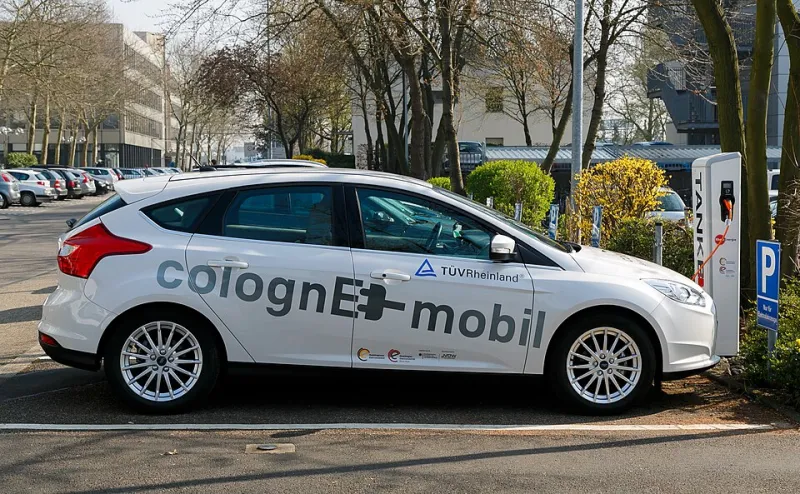
Photo: CEphoto, Uwe Aranas, CC BY-SA 3.0, via Wikimedia Commons
There's a chart circulating among EV owners in Phoenix that should worry anyone shopping for an electric car: real-world battery degradation data, sorted by climate. The pattern is brutal. EVs garaged in Arizona and Nevada are losing usable capacity measurably faster than identical models in Minnesota.
Lithium-ion batteries hate heat. Push a cell above 100°F for extended periods and the electrolyte degrades, the anode grows resistive films, and range quietly evaporates. Now consider that a black car parked in a Las Vegas summer lot can see cabin temperatures north of 160°F — and its battery pack isn't far behind.
Here's the twist: this problem was largely solved a decade ago. By people who live in one of the hottest places on Earth.
The Desert R&D Advantage
Saudi Arabia and the UAE have been running electric vehicle programs under conditions that would make a Death Valley test driver wince. Ambient summer temperatures in Riyadh routinely exceed 110°F, and ground temperatures can cook pavement tires. Any EV deployed there without serious thermal management would be a very expensive brick within a few summers.
So Gulf engineers — working with programs like Saudi Arabia's EV initiatives and UAE-based mobility labs — treated heat as the primary design constraint, not an edge case. Their innovations cluster around three ideas:
1. Liquid cooling as non-negotiable. While some early EVs got away with air cooling, Gulf-climate testing made clear that liquid thermal loops, often paired with refrigerant cooling, are the only way to hold pack temperatures in the optimal 60–95°F band. Every serious EV sold in the US today uses some version of this architecture. The Gulf helped prove it wasn't optional.
2. Preconditioning as a religion. Gulf-market vehicles aggressively pre-chill the battery before fast charging and before driving, using grid or stored energy. Charging a hot battery is the single fastest way to wreck it — and heat-tuned software refuses to let it happen.
3. Chemistry that shrugs off heat. Research out of Saudi universities and partnerships with global battery makers has pushed lithium iron phosphate (LFP) and heat-tolerant cathode formulations into mainstream use — chemistry that trades a little energy density for dramatically better thermal stability.
What This Means for American Drivers
If you live in Phoenix, Las Vegas, Tucson, Houston, or anywhere the summer forecast reads like a pizza oven, treat heat tolerance as a buying criterion, not an afterthought.
Check the thermal management spec, not the range sticker. Two EVs with the same EPA range can degrade at wildly different rates. Prioritize vehicles with active liquid cooling and documented preconditioning behavior.
Use LFP chemistry to your advantage. Models like Tesla's LFP-equipped Standard Range cars and several Ford and GM entries use chemistry that tolerates heat and full charging cycles far better than older NMC packs. In Texas, that's the difference between a battery that's healthy at year eight and one that isn't.
Charge smart. Avoid DC fast charging immediately after highway driving in July. Let the pack cool, or charge overnight at home when temperatures drop. Garaged vehicles in Mesa degrade visibly slower than driveway-parked ones in the same zip code.
Don't trust range estimates blindly in summer. Expect 15–25% range loss in extreme heat with AC running. Plan accordingly.
The Bigger Picture
There's a certain irony in the current moment. Western automakers once treated Middle Eastern markets as afterthoughts in EV planning. Now, as climate change pushes American summers toward Gulf norms, the engineering lessons learned in Riyadh and Abu Dhabi are becoming mandatory coursework for every carmaker selling in California and Texas.
The desert doesn't care about your marketing deck. It cares about your thermal loop. And the engineers who've lived with that reality longest have a head start the rest of the industry is only now catching up to.